
Amanda has been featured in several anthologies, including Dead Letters: Episodes of Epistolary Horror, Halloween Horrows: 13 Tales of Terror, Shallow Waters Vol. 9, The Devil Take You: 14 Tales of Medieval Horror, Brackish Harbor: An Anthology of Eldritch Horror, and Unspeakable Horror 3: Dark Rainbow Rising, but did you know that she’s also released several novels of her own across several genres? If you like fantasy: try Drift. Into horror? Give Nocturne, Deep Down, or Out of Curiosity and Hunger. How about fairy tales? She’s written mash-up series, Thorns. Amanda is a multi-genre talent, and it is my pleasure to introduce you to them today!
Q: Who has been your biggest supporter(s) throughout your writing career?
A: My family has probably been my biggest supporters. I think my obsession with writing bewilders them in a lot of ways, but they recognize that when I’m writing, I’m working. They respect my time, tolerate my absent-mindedness, and even if they don’t understand it, they celebrate my victories.
Q: Where do you draw inspiration from in your work?
A: Not from any one thing, and sometimes it feels like it comes from nothing. I draw from dreams, from stories people tell, from eavesdropping on conversations, from watching movies and television, from listening to music, from my own experiences that I tuck in my back pocket for possible later use.
Q: What does it mean to you to be an author?
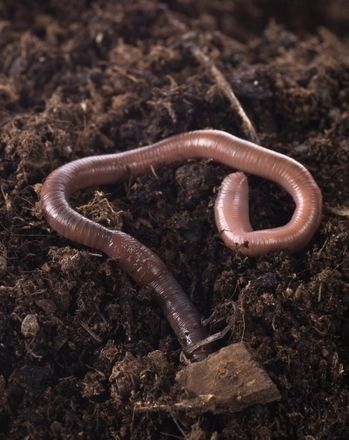
A: I’ve wanted to be a writer since second grade and saw myself becoming one as early as third grade, when I was obsessed with worms and hypnotism and, therefore, decided to write a story in which a worm gets hypnotized. It’s something that occupies my mind, my time. It’s a big, beautiful, color series of five-sense movies in my head all the time. Putting that into words is a challenge, but it’s so gratifying when it goes right.
Q: What is your writing process like? Do you listen to certain music, snack, make loads of phone notes when inspiration randomly strikes?
A: I have little notebooks and sticky notes, and even a constantly open Notepad window on my computer, for me to jot down thoughts as they occur. You always think you’ll remember; you won’t remember. Write it down.
I don’t do a lot of plotting or planning. If I have a vague mental outline of scenes and some sense of how they connect together, I can usually work from that. I sometimes write things out or outline if I’m having trouble seeing connections or, as with Deep Down, I have to stop for a while and I want to remember my original plans, but that doesn’t happen often.
I like having some kind of flavored drink with me, a skinny mocha latte, a hot chai latte, flavored seltzer, ginger ale. I also like having my music playing. Sometimes I can handle lyrics and sometimes I have to stay instrumental only. These are all various forms of sensory stimulation that keeps my brain sparkling while I work.
Q: Is there a genre or subgenre that you want to explore that you haven’t yet? Conversely, are there any that you’ll never write?
A: I’ve always wanted to write a murder mystery, but I think the closest I’ll ever come is a thriller. I don’t write surprise twists very well. Apparently, I’m too oblique with my clues. I’d also love to write something more literary fiction, with only a dash of supernatural, but I’ve found that the more real my world gets, the less interesting it is for me. I already live in the world; why do I want to write in it, too? If I write realistic fiction, it tends toward the extreme limits of reality. I used to think I’d never write historical fiction, but I’ve dipped my toe in for short stories and a novella.
I don’t want to say I’d never write anything, but romantic comedies seem out of my wheelhouse.
Q: What has been the hardest part of your career as an author so far?
A: I think the least pleasant part for me is writing synopses, because I don’t like to write my stories twice, but I’ve developed a process that makes that a little easier. I think the hardest part is accepting that certain measures of success don’t always translate financially. It would be nice to support myself with my writing, but it doesn’t seem feasible. As a result, though, I seem to have trouble valuing my work and my time.
Q: What do you consider to be your greatest strength and weakness as an author?
A: I’ll start with weakness: I love learning, but I hate research, which is a big reason why I don’t write historical fiction much. My strength is that I like creating my own worlds, more reality-adjacent, and sometimes leaving time periods intentionally ambiguous.
Q: Who is on your radar as someone you’d love to work with?
A: I’ve aspired to working on larger works with small presses through whom I’ve published short fiction, presses such as Hungry Shadow and Quill & Crow, and there are some magazines I aspire to being published in, such as Apex, Uncanny, Nightmare, and Strange Horizons. It’s good to have goals.
Q: At some point in our lives, we’ve all heard the negative comments: “You’re not good enough.” “You’ll never make it.” “This is the worst thing I’ve ever seen.” “You don’t belong.” How do you move forward when faced with negativity?
A: I think having worked in a fairly solitary way with my writing for so long, there hasn’t been a lot of negativity in my direction – at least that didn’t originate in my own head. There hasn’t been a lot of positivity either. I’m my own cheerleader most of the time. Sometimes it’s hard to keep momentum when you’re the primary one pushing yourself.
Every so often, if I’m discouraged, I ask myself, if you never publish another story and everything you self-publish gets zero reads, would you stop writing? Thus far, the answer has been no. As long as my brain can write and wants to write, I have to do that, whether I’m read or not. And I have to do as much as I can while I can, because who knows if or when something might happen to get in the way of that: traumatic brain injury, stroke, dementia, etc.
Q: What advice would you give to women who are wanting to write, especially if it’s something others might perceive as “outside of the norm”?
A: I think the internet has shown us that what we think is the norm isn’t. Producers and distributors thought for decades that horror was for men, but actually analyzing audiences showed that so many women loved the genre as well, and not just because they were brought to horror movies by their boyfriends to hold hands at the scary parts, as people once thought.
These days, there are so many women and nonbinary voices in horror, even extreme horror, it’s impossible to feel alone among them. Find your people. Even if your audience is small, embrace your niche.

In February, Amanda released Question Not My Salt with Crystal Lake Publishing, an extreme horror that takes traditional Thanksgiving hospitality and twists it into a sinister meal that you may never recover from. This, honestly, sounds so good and I can’t wait to start reading it! If extreme horror is your bread and butter (don’t tell the Samuels family!), you can get Amanda’s newest release here! Make sure to check out her website, and follow her on Instagram and Facebook, too, so you get all of her important updates.
They also write paranormal and gothic erotica under pen name Aurelia T. Evans, and have released the Sanctuary trilogy, the Arcanium series, fantasy series Meridian, and have been featured in several anthologies. Check her out on her website and on Amazon to read through her spicier catalogue!
And if you’re eagerly anticipating more from Amanda, check out her recommendation, Some Will Not Sleep, a short story collection by Adam Nevill that Amanda says showed her “what truly weird short fiction can do and how it can make you feel like you stuck your hand in a vat of raw chicken cutlets.”
Discover more from Alpha's Court
Subscribe to get the latest posts sent to your email.


 Alpha's Court