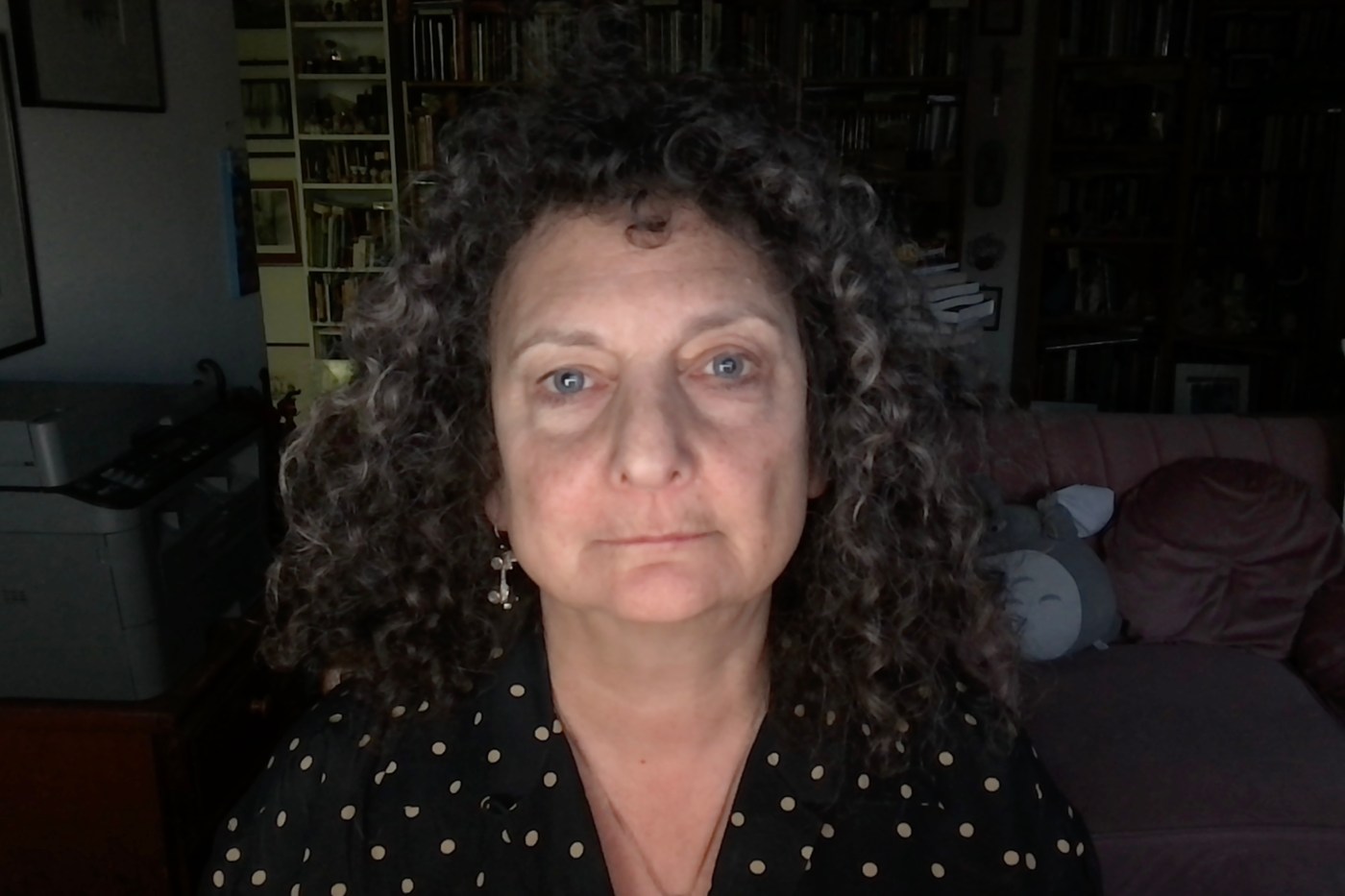
Ellen Datlow has been editing sf/f/h short fiction for over four decades. She was Fiction Editor of OMNI Magazine for seventeen years, then Editor of SCIFICTION, the fiction arm of the SCIFI Channel’s website, for six years.
She currently acquires short stories and novellas for Tor.com and its horror imprint, Nightfire. She has edited numerous anthologies for adults, young adults, and children, including The Best Horror of the Year annual series, When Things Get Dark: Stories Inspired by Shirley Jackson, Body Shocks: Extreme Tales of Body Horror, Screams from the Dark: 19 Tales of Monsters and the Monstrous, and Christmas and Other Horrors.
She’s won multiple Locus, Hugo, Stoker, International Horror Guild, Shirley Jackson, and World Fantasy Awards plus the Splatterpunk Award and, in 2012, Il Posto Nero Black Spot Award for Excellence as Best Foreign Editor.
Datlow was named recipient of the 2007 Karl Edward Wagner Award, given at the British Fantasy Convention for “outstanding contribution to the genre” and was honored with the Life Achievement Award given by the Horror Writers Association, in acknowledgment of superior achievement over an entire career and honored with the World Fantasy Life Achievement Award at the 2014 World Fantasy Convention. The Shirley Jackson Awards, Inc. recently presented her with a special award in recognition of the anthology When Things Get Dark: Stories Inspired by Shirley Jackson (Titan Books, 2021).
She runs the Fantastic Fiction at KGB reading series in the east village, NYC, with Matthew Kressel.
It is my absolute honour to bring you Ellen’s interview today, and I hope you enjoy getting to know such an amazing woman as much as I have.

Q: Who has been your biggest supporter(s) throughout your editing career?
A: Different people over time. Ben Bova, who hired me as Associate Fiction Editor at OMNI Magazine back in 1979, and most of the Editors I worked under at OMNI. The publishers of my anthologies over the years. Craig Engler and Sean Redlitz, who hired me to create the SCIFICTION on the Scifi.com website for six years.
Irene Gallo, the co-creator of Tor.com and visionary who hired me to acquire short fiction and novellas for Tor.com. My agent, Merrilee Heifetz. The hundreds of writers I’ve worked with over the past forty-five years. The readers who continue to enjoy what I edit.
Q: Professional editing can be a hard industry to break into, especially for women. What was your path like when you knew professional editing was the direction you wanted to go?
A: I began working for book publishers, but over the five or so years I worked for several different ones, I basically got nowhere. Mainstream book publishing in the 70s was (and likely is still) classist. If you didn’t graduate from an Ivy League college, you were toast.
I found my people and my career when OMNI magazine started publishing October 1978 and I discovered its existence — thanks to Donald Hutter, the then Executive Editor of Holt, Rinehart and Winston, where I had worked as an Editorial Assistant for three years. Don knew about the magazine and suggested I meet with the then Editor (and one of Don’s authors), Frank Kendig.
He introduced me to Ben Bova, the Fiction Editor, and Ben brought me on to read his slush pile (for free) while he was in the UK for a month. When he returned, he told me to stick around – he apparently knew he’d be taking Frank Kendig’s job as Editor. He hired Robert Sheckley as Fiction Editor, and I was hired as Associate Fiction Editor. Bob left around one and a half years later, and I was promoted to Fiction Editor. The rest is history.
Q: Editing is often a thankless job when it comes to the wider fanbase of an author. What does it mean to you to be a professional editor?
A: I love helping writers to make their stories better. I love creating anthologies; by doing so, I’m able to get writers to write stories they might otherwise never have written.
Q: How do you keep yourself focused when undertaking lengthy editing projects?
A: Deadlines. When I have a deadline or create a deadline for myself, I know I have to start work several weeks or months (depending on what it is I’m working on – short story or novella, reprint anthology or an anthology with all new stories). The great thing about working on more than one project at a time is I can take a break from one and work on a different one.
Q: What inspires you the most in your career? On days when it’s a slog to get through a project or when you just can’t find the motivation, how do you keep yourself moving forward?
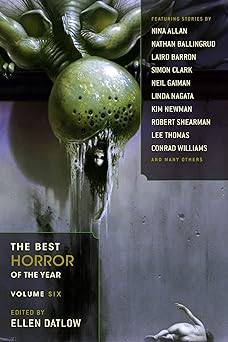
A: The fact that there are always excellent, new writers out there whose work I hope to discover and read. This is what has kept me editing a Best Horror of the Year anthology for almost forty years. By reading as widely as I do for each volume, I often discover voices I’m previously unaware of.
Sometimes I’ll just take a break for a day or two and that refreshes me. I’m one of the few people I know who rarely gets depressed (when I do, I can be jollied out of it really easily by myself or others). But knowing I can approach writers whose work I love and ask them for a story is a great motivation.
Q: What has been the hardest part of your career as a professional editor so far?
A: Coming up with a good idea for a new anthology and selling it to a publisher. Rejecting stories by friends and/or writers I deeply respect and with whom I would like to work.
Q: What do you consider to be your greatest strength and weakness as a professional editor?
A: I’m good at working with writers and know that the best way to get a great revision is to ask the right questions so that the writer figures out how to fix their story.
I’ve mostly acquired and edited short fiction throughout my career, and although I’ve edited novellas over the years, I still feel I’m weaker at the novella length. Figuring out how to fix structural problems is not my forte, although with each novella I edit, I’m learning.
Q: Who is on your radar as someone you’d love to work with?
A: There are always writers whose work I admire and want to work with. Writers I’ve worked with in the past who are no longer writing short fiction because they no longer have the time. The tragedy (for me) of editing short fiction is that many of my writers move on to novel writing (for economic reasons as much as any other reason) and I lose them to that.
Q: At some point in our lives, we’ve all heard the negative comments: “You’re not good enough.” “You’ll never make it.” “This is the worst thing I’ve ever seen.” “You don’t belong.” How do you move forward when faced with negativity?
A: In my early days in the fields of science fiction and horror, women often felt we were not welcome to the table. That changed sooner in science fiction (in the 80s, when many more women entered the field, editing magazines, webzines, and books). It took longer for horror.
This is, of course, still an issue for BIPOC and LGBTQ+ people. You need to push past the negativity, have confidence in your abilities and your work. Avoid people who make you feel badly about yourself (if you can) and surround yourself with those who value who you are and what you do (personally and professionally).

Q: What advice would you give to women who are wanting to get into professional editing? Is there a certain degree or experience level that they should have?
A: Being a reader and loving reading is, of course, crucial. I was an English literature major, but that doesn’t really matter.
It’s been so long since I entered the profession that I’m not sure how things have changed. I know there are editing and publishing courses. The only course I found useful (many many years ago) was the one during which the teacher brought in experts in different jobs of publishing: publicity, marketing, editing, subsidiary rights, agenting — which gave us a rounded view of what’s involved in working for a book publisher.
The many jobs I held in small and large publishing houses, and at OMNI and SCIFI.COM taught me the politics of publishing (and offices in general). How to deal with other departments, other points of view. How to deal with bosses. When to fight for something you want to acquire and when to let it go (if you report to a higher up and you aren’t allowed to make the final decision on an acquisition).
See if you can find a position to read slush. It gives you a feel for what’s out there. Which stories work or don’t work, and you might eventually learn to see why if you read enough of them.
The thing about substantive and line editing is that it cannot be taught. One has an innate ability and over time, that ability is honed the more one edits. I’m not referring to copy editing – that can be taught.

The Best Horror of the Year Volume Fifteen was just released in January this year, and the cover is absolutely gorgeous! Ellen has a few other projects in the works, including Fears: An Anthology of Psychological Horror, an all-reprint anthology coming out in the fall from Tachyon, and novellas by Sarah Pinsker from Tor.com and Nathan Ballingrud from Nightfire. She also has several great short stories that she acquired for Reactormag.com (formerly Tor.com) by Stephen Graham Jones, Laird Barron, Nancy Kress, Veronica Schanoes, Kaaron Warren, and many others that will be coming out throughout the year!
When asked what her favourite read so far this year was, Ellen had this to say: “I’m still reading novels from 2023 and just finished the fabulous Whalefall by Daniel Kraus. It’s about a teenage boy, his relationship to his late father, and the unbelievable yet believable premise of the boy having fallen into a sperm whale’s mouth. Edge of your seat suspenseful.”
When I first started reading horror and really got into the genre, one of the most common things that I heard was to try one of Ellen Datlow’s anthologies. I was told by loads of people that I would never be disappointed by anything that she’d been part of, and I can honestly say that this definitely held true! I am slowly growing my Datlow collection, but every single one that I’ve gotten my hands on so far has been a knockout! She’s become an instant buy for me, and I can’t wait to see all the amazing stories she’s acquired this year!
Check out Ellen’s website for even more book news and updates! You can also follow her on X and Facebook.
Discover more from Alpha's Court
Subscribe to get the latest posts sent to your email.


 Alpha's Court
Leave a comment