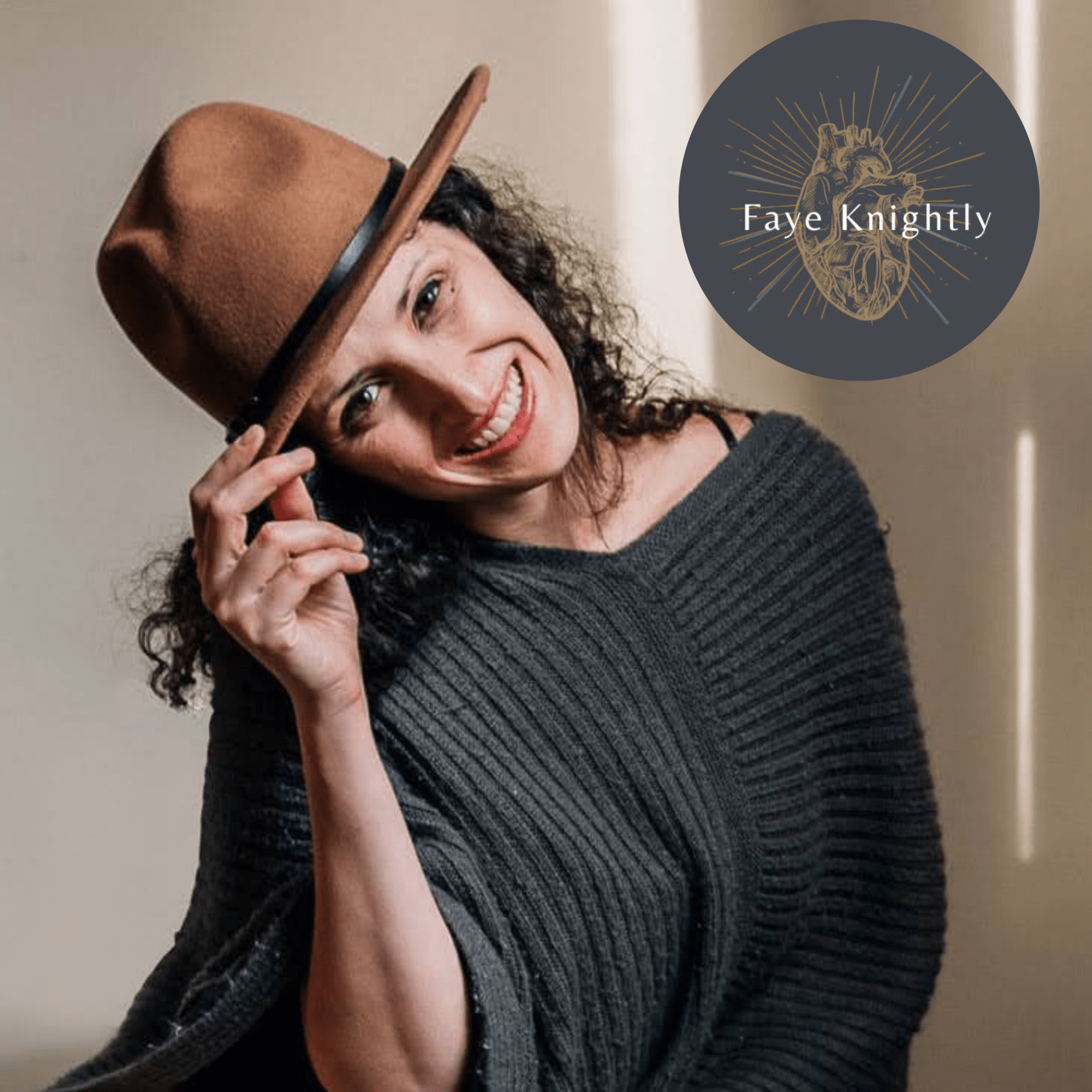
Faye Knightly writes paranormal romance with devastatingly dark elements. She is a firm believer that a touch of darkness for her characters makes the light shine all that brighter in the end. Watching a character make their way through the most difficult of times has always given Faye strength. Faye is also the co-founder of The Sisterhood of the Black Pen!
Read on for my interview with her as I get to know Faye as both an author and an editor!
Q: Who has been your biggest supporter(s) throughout your writing and editing career?

A: If I had to name a single person, it would be my Sisterhood of the Black Pen co-founder, Laurae Knight. Always available and someone who also suffers from anxiety, we just get each other and the struggles of being in an oversaturated industry that requires us to be creative on demand.
Laurae and I also belong to a small writing group which is where The Sisterhood of the Black Pen started. We’re a group of about fifty women writers and have known each other for four years now. Even though we’re spread out across North America and few of us have met in real life, I know it’s a safe place to share my writing struggles and find the support I need to get my head back in the game.
We’ve worked together on developmental editing also, and it’s so helpful to have someone you jive with to be able to touch base with when you’re struggling with a story component.
Finally, I’ve been lucky to find a reader who likes my work enough to shout it from the rooftops and read some of my rougher pieces. She’s been such a help through the Breeders release and knowing she’s someone invested in me as an author and seeing my work on the shelves fills me with so much confidence that I just wouldn’t be able to find with another author.
Q: Where do you draw inspiration from in your work? In editing? On days when it’s a slog to get through a project or when you just can’t find the motivation, how do you keep yourself moving forward?
A: I think my inspiration comes from a variety of places. Our brains are clever little things always picking up on certain feelings or atmospheres that were effective and those get kind of bundled up in our own work. Without a doubt, I know Buffy the Vampire Slayer influenced one of my series as the relationship between my main characters carries the same passion and weight as the Angel-Buffy couple from the show. Otherwise, I see bits and pieces of the way a show or book made me feel but presented in a different context within my own story.
My first full length release, Breeders, was inspired by another werewolf book I read by the fabulous M.L. Francis. In her story, one of the alpha’s betas (like his generals and bodyguards) is assigned a mate who also wants to be a beta. The alpha wants to include her, but their rules are against incorporating a mated couple in the alpha’s group of betas lest their loyalty to the alpha above everything else be questioned. It’s a very empowering story where the alpha finally includes her, but something about the divided loyalties really stood out to me.

In my world, there was a previous conflict between packs where mates and families were pitted against each other to the point where all the packs in the conflict agreed to abolish the family structure, outlawing mates and having children conceived during masked breeding parties that hid the father’s identity. Obviously a very different concept from M.L. Francis’ world, but without a doubt my brain was riffing off of the tension she created within her alpha’s betas to expand upon it and make it extreme – pack above all in a communist society with a eugenics type breeding program where breeders are assigned. It’s definitely a dystopian world, but I love the challenges finding love in such a loveless space presents my characters with.
Breeders was intended as a standalone but has garnered so much interest that I am in the process of writing an interconnected standalone follow up that is a bit Gattaca inspired. In the Gattaca world, everyone’s life expectancies and deficiencies are known through simple blood tests and genetically engineered children are considered superior. They have advantages children born ‘out of love’ do not have.
In Watchers, our main character has asthma and has been excluded from the breeding program due to his possibly inheritable condition. This creates a lot of depression and resentment in him, and when he watches a woman go through a breeding party and feels a strong mate bond, he decides to sneak his way into the program in order to meet her.
As far as in editing, knowing the finished product is going to be something the author will feel immensely proud of and that I can help them get to that point really helps me to feel good about what I’m doing.
Q: Editing is often a thankless job when it comes to the wider fanbase of an author. What does it mean to you to be a proffesional editor?
A: It means to be the person a writer relies on to strengthen and solidify their story. This is not a job to take lightly. I know from being a writer that an author’s stories are so incredibly personal and precious to them. Knowing they trust me to preserve the heart of their tale while working through story issues is empowering.
Q: What does it mean to you to be an author?
A: It’s everything to me. I never would have said this was a dream of mine, not because I wouldn’t have wanted it, but because I never would have dared to dream I could be the one creating the kind of magic of storytelling I’ve always gravitated to.
Q: What is your writing process like? Do you listen to certain music, snack, make loads of phone notes when inspiration randomly strikes?
A: Many authors listen to elaborate-themed soundtracks to help get them into the mood for their specific story. I do not. Instead, I listen to white noise and find it helps me focus. I’m too easily distracted to listen to anything else (although I do love music).
Sometimes, a scene or quote will come to me, and in those cases, I do an oral dictation on my phone. Usually this happens when I’m driving so using voice-to-text is my only option. Otherwise, I really just let the characters and their story carry me along. If I plot out a story fully ahead of time, it just doesn’t capture my interest the same way as when it comes to me while writing. I’m my first reader and sort of enjoying the story as it unfolds. Plotting kills that for me.
Q: How do you keep yourself focused when undertaking lengthy editing projects?
A: There’s always an end in sight with editing, and I am able to work towards dates fairly smoothly just by making cut off points for myself.
Q: Is there a genre or subgenre that you want to explore as an author that you haven’t yet? Conversely, are there any that you’ll never write?
A: I will never write a cozy mystery or a contemporary anything. I’m the kind of person who always seeks out escapism and anything cozy is an automatic no. I enjoy being moved and finding excitement in my stories, challenges, fights, and conflict overcome through strength. There has to be a fantasy or paranormal element or I’m not happy with it.
I’d love to get more into writing epic fantasies and am trying it out with my upcoming dark fantasy release, When the Stars Whisper. I describe it as a mix of Dune and Game of Thrones, but the worldbuilding in epic fantasy has always transported me and been so gripping that I’d like to make a more involved world. A lot of my work to date has been more relationship driven, but within an interesting world or society.
Q: What has been the hardest part of your career as an author and as an editor so far?
A: As an author, probably the not knowing where things are going. I’ve been involved in enough releases by now and seen so many brilliant writers not make it onto reader radar that it’s hard not knowing whether my books or author career will go anywhere. Being an indie author is also difficult in that you are your everything and there are a lot of pieces of the business you need to figure out. My recent release and the success of Breeders has been an eye opener in that regard. There’s a feeling that I’m not doing enough or I’m doing too much on the marketing side and need to focus on the next book. Truthfully, I’ve wanted nothing more than to crawl back into my writer cave and write the next book, but an indie author needs to keep a lot of balls in the air if they want to have a chance of success.
For editing, I would say the balance between improving or suggesting changed to authors without inserting my own voice. Editing is meant to be collaborative, but the work is the author’s, and my role is to make sure it still communicates the story they want told.
Q: Professional editing can be a hard industry to break into, especially for women. What was your path like when you knew professional editing was the direction you wanted to go?
A: Mostly, I’d done a lot of beta reading and paid beta reading prior to doing developmental editing work on the anthologies. Because I’m a writer and a perfectionist myself, I feel I’m able to bring a lot of value to the authors I’m working with. All editing is a collaboration between the author and their editor and I try to keep that front of mind.
Q: What do you consider to be your greatest strength and weakness as an author and an editor?
A: One strength would be feeling the emotions of my characters as deeply as I do because that helps me to write them better, and it makes me want to be better so I can do a better job of representing them on the page. Another strength is my obsessive personality. I am able to get completely lost in a story and so focused on writing that it allows me to be very productive. My strength as an editor is definitely my own abilities as a storyteller and as someone who feels characters and their intentions very deeply. I’m able to bring that to a story and help to give it more depth.

My biggest weakness as an editor would be knowing when to step back and let the author take over. My obsessive personality is also sometimes a weakness in my writing as it’s hard to shift my focus around between different projects or between marketing one book while writing another – my mind wants to go back into the other world, and I only seem to be able to exist in one at a time. I’ve recently learned that I cannot read a book while writing. I become too consumed by it and unable to switch back into my own world’s headspace.
Another weakness is a common one among authors – perfectionism. I’ve actually written four full length novels, but only released one so far because there’s this feeling that they are never ready. It’s almost like a block where you don’t want to share something due to it not being good enough but have a hard time getting it to the point where you feel it’s done. This is a challenge I’m committed to working through and the release of Breeders has helped. I’ve got a much better editing process now and am so excited to be able to share more of my work with readers.
Q: Who is on your radar as someone you’d love to work with?
A: As an editor, I’d love to work with my own editor, Rachel Mitchell. She’s been such a powerhouse with my own books and I’d love to learn more about her process.
As an author, from the bigwigs, probably Brandon Sanderson whose Mistborn trilogy is one of my favourites. His way with worldbuilding and magic systems is incredible. From the non-bigwigs, probably my favourite indie author, Elizabeth Myrva. I’m just waiting for her to become famous. Her worlds and characters absolutely grab a hold of my soul, and I’d love to work with her and get into her head a bit more.
Q: At some point in our lives, we’ve all heard the negative comments: “You’re not good enough.” “You’ll never make it.” “This is the worst thing I’ve ever seen.” “You don’t belong.” How do you move forward when faced with negativity?
A: Absolutely, and authors are no strangers to negative reviews. Fortunately, there are positive reviews too, or positive comments. When I get a negative review or something discouraging, I head on over to my Goodreads and remind myself that I’ve made something people find worthy of five stars. Something powerful enough to move readers to tears. Reading these reviews helps me to remember that my stories are worth writing. Even if the story isn’t right for some people, it’s magic for others and bringing that magic to others is what inspires me as an author.
I remember the times I have succeeded and feel I’ve helped an author tell their story. Bringing a story to life and giving it the kind of depth an author envisions is an important process and I’m lucky whenever I get to be a part of it.
Q: What advice would you give to women who are wanting to write, especially if it’s something others might perceive as “outside of the norm”?
A: I have a lot to say to these women. Firstly, the story they have in their mind came to them and is theirs to tell. No one else can do it but them, and their story deserves to be told. As for a story being outside of the norm, that’s a good thing. Normal is boring and pushing the boundaries is an excellent way to stand out.
Q: What about to women who are wanting to get into professional editing? Is there a certain degree or experience level that they should have?
A: I would say to start small and do some free beta reading for authors to get a feel for what it’s like to work with authors and to see how well you’re able to determine how to work with a story.
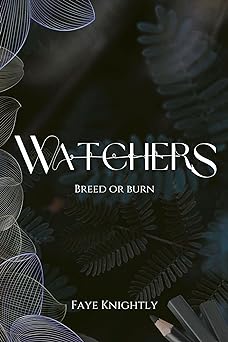
At the end of June, Faye will be releasing Watchers, an interconnected standalone to Breeders. Watchers follows a main character who has been determined defective for the breeding program. As he’s watching in the observation room, he sees Syl, a woman who he feels a strong mate bond to. He’ll do anything, even betray the pack and sneak into the program, to make Syl his.
Faye is also planning to release a follow up story to Breeders to tell more of their story, and she has another redemption arc planned for a fairly unredeemable character in the book (IYKYK). In other projects, she is hoping to have her dark fantasy, When the Stars Whisper, released by the end of August. This story follows a badass lion shifter FMC who has been raised to join the lion king’s harem, but he abuses her when she finally gets included in the harem. She sets out to find a challenger for his throne to get her revenge for his terrible treatment of her. Faye plans for this to be a trilogy, so you’ll get to spend quite a bit of time with these characters!
The Sisterhood of the Black Pen is currently going through submissions for their next anthology: Twisted Tales of Halloween Horror: Carnival of Carnage. She and Laurae work with a lot of authors doing developmental editing on their anthologies, and they have a lot of fun bringing each new collection to life.

Faye’s favourite book of the year so far is Iron Flame by Rebecca Yarros. She’d heard a lot of good things about it and the series that she just had to check it out for herself. Faye thought the books are exceptionally well-written and that Yarros had done a great job with the romance and spice, making for such an engaging read!
To stay up to date on all of Faye’s writing news, check out her website and follow her on Instagram! You can also follow The Sisterhood of the Black Pen on Facebook and Instagram; their anthologies are always so good to read, so you want to make sure that you get all the important news and updates!
Discover more from Alpha's Court
Subscribe to get the latest posts sent to your email.


 Alpha's Court
Leave a comment