
Last year, I met Steve Bryant at Tomes of Terror, but it wasn’t the first time we’d met. Nine years prior (in 2014), I met Steve at a Barnes and Noble in Bloomington, Illinois. I had asked my mom if we could stop, and Barnes and Noble was doing a signing that day. I had never seen an author event before, so I was curious and made a stop at his table, after much internal convincing because I was really shy and didn’t know if it was okay to stop since I didn’t know the author or his work.

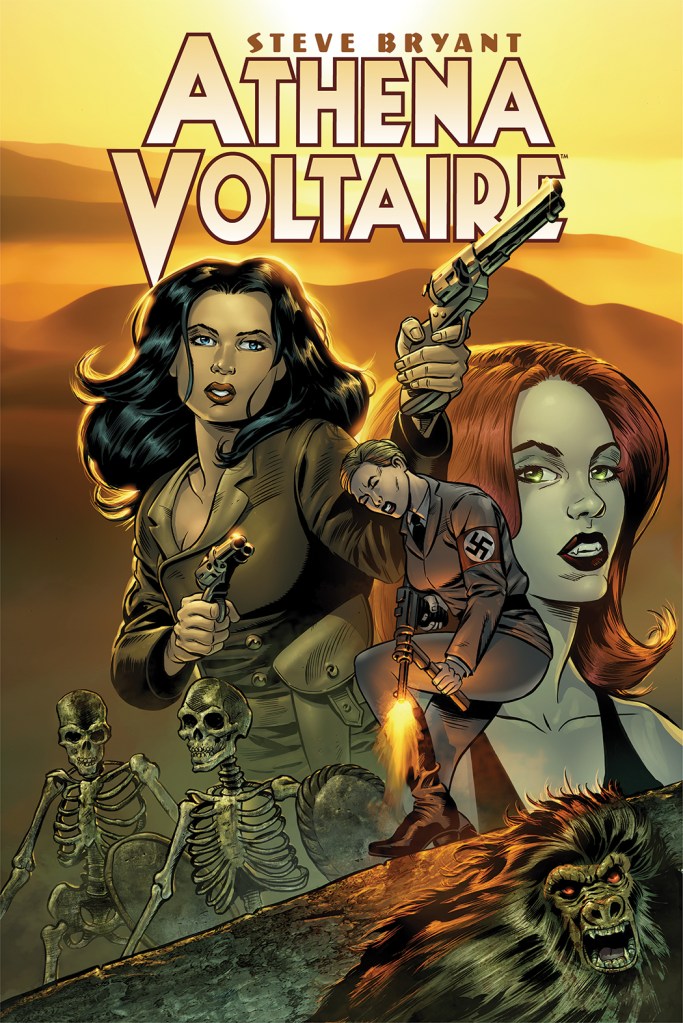
Steve was the literal nicest human being on the planet, and we spoke for a little bit about comics/graphic novels and the like. I fell in love with his work on the spot and ended up walking away with the Athena Voltaire Compendium that had recently come out, Steed and Mrs. Peel: Volume One, and Canterville Ghost. So, imagine my surprise when I realized that he was going to be at Tomes last year! I was so excited to meet him again, and stock up on more of his work, and I can’t wait to do so again this year in a few short weeks!
It’s my pleasure to introduce you to him, and I hope you love his work as much as I do!
Q: Who has been your biggest supporter(s) throughout your career?
A: My dad was always incredibly supportive. He never really understood genre fiction (at all!), but that never stopped him from being encouraging.
Q: What inspires you to write?
A: I love to tell stories. I love creating compelling characters and putting them in extraordinary situations. And, best of all, I love to draw stories that I write. In comics, authorship is in both the writing and the art.

Q: What is the most surprising thing you’ve learned, whether about yourself or the industry as a whole, since you started your writing journey?
A: In comics, with crowdfunding platforms like Kickstarter, it’s possibly for creators to make more money by self-publishing than they would through a publisher. I’ve been told that it’s a different story for prose authors, though.
Q: If you could meet with your past self at the beginning of your career, what one thing would you tell yourself?
A: Don’t wait until you feel ready. You never will. Better to jump in, take a few hits, and start building. It’s scary, but it’s also a much faster way to improve your craft.
Q: What has been the hardest part of your career so far?
A: Drawing! I’m just so slow!
Q: If you could go back and change anything about your career, would you? If so, what would it be?
A: Y’know, I’ve thought about this a lot over the years. And, while I regret my own lack of confidence in my early years (and the missed opportunities that came with it), I think things have turned out pretty well. So, I guess not.
Q: What do you consider to be your biggest strength as an author? Your kryptonite?
A: Strength: I have a ton of ideas! Kryptonite: I don’t have time to draw the all, and I’ve roped most of my other artist friends into collaborations already!
Q: Who is on your radar as someone that you’d love to work with?
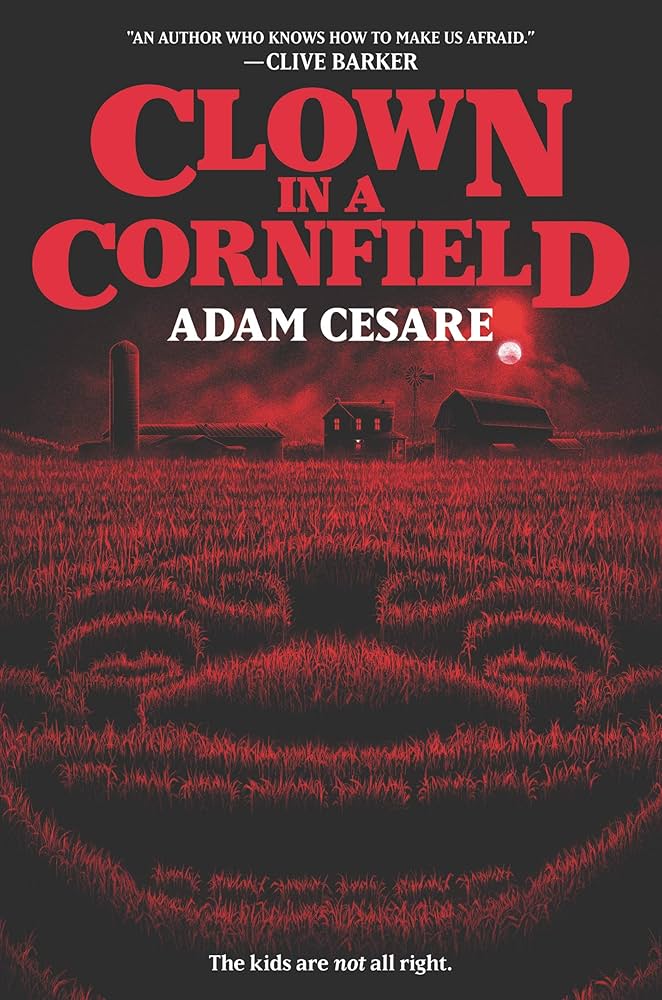
A: I’d love to adapt Adam Cesare’s Clowns in a cornfield series into graphic novels. That counts as “working with,” right?
Q: Dealing with negativity can be challenging, whether that’s from bad reviews, critics, social media, or other sources. What is your strategy for dealing with that side of the industry?
A: I used to have a larger online presence, but with all the toxicity that’s come in the wake of 2016 – bot farms and billionaires pushing lies and distorted narratives – I’ve stepped back. Add to that the increased focus on algorithm-driven corporate content that throttles individual creatives, and it’s become increasingly bleak.
I’m still active, primarily with my monthly newsletter, where I share art from upcoming projects, photos from conventions, and talk about books, movies, and TV I’m watching. But I miss the interactive nature of social media.
Musician/Patreon co-founder Jack Conte had some interesting thoughts in his SXSW keynore speech, The Death of the Follower and the Future of Online Creativity, earlier this year. Conte calls for more focused communities of fandom, whether it’s through Patreon, Discord, or something else, rather than the wider and viral focus of platforms like Facebook, Instagram, and TikTok.
With that in mind, I like the idea of building a Discord community with some writer/artist friends and it’s something I’d like to tackle in 2025.
Q: What has been the most impactful piece of advice that you’ve been given, and how have you used that advice in your creative journey?
A: When I was in my early 20s, I wrote an embarrassing fan letter to comic artist Steve Rude. It was full of all kinds of “magic bullet” thinking, like “What kind of brushes do you ink with?” and similar stuff. It was the sort of questions that amateurs ask – thinking that the secrets lie in the tools, rather than in practice and perseverance.
To his credit, Rude answered every question, in detail, and politely. but the capper was how he wrapped it up, “Because we are all individuals, you will find your own answers to these questions.”
That was incredibly liberating as a young creative, and it’s something that’s stayed with me for decades since then.

Excited to meet Steve at Tomes yet? If you stop by his table, Steve will have his Evie and the Helsings comics (think Buffy the Vampire Slayer meets Josie and the Pussycats), as well as a ton of Athena Voltaire comics (you best believe I’m there for those; I’ll be after the volumes that came after my Compendium), Ghoul Scouts (his all-ages kids versus monsters graphic novel series), and some original art and prints for good measure!
Tomes will be the last opportunity you’ll have to meet Steve this year, but he’s already got several appearances lined up for 2025, including Chicago’s Windy City Pulp show in April, Charlotte’s HeroesCon in June, and San Diego’s Comic-Con in July. He’s hoping to add three or four more shows, and hopefully Tomes of Terror again! In the meantime, let’s pick Steve’s brain more with some sillier questions.
Q: If you were to write a spin-off about a side character in any of your stories (published or not), who would you pick and why?
A: I’d love to do a spin off for my 1930’s pulp series, Athena Voltaire, focusing on Division 7, the part of British Secret Intelligence Service focused on the unexplained. In the way that Athena Voltaire adventures are rooted in the supernatural, mythology, and folklore, Division 7 would be all about investigating and combatting over-the-top Nazi mad science.
Q: What is your worst reading habit? Are you a dog-earer, a margin-writer, or do you practice some other egregious offense?
A: I’m proud to say I’m largely inoffensive in my reading habits!
Q: Who is he most stressful character you’ve ever written and why?
A: Without spoilers, it’s a loyalty shift that an antagonist undergoes. One character takes them at face value and another one doesn’t. It addresses a lot of things I’m conflicted about regarding redemption and how if there’s a line that can’t be crossed, what incentive is there to change?
Y’know, typical comic book narratives!
Q: If you were to be remembered only by the words you’ve published, what would future historians think of you?
A: “His words are okay, but why didn’t this guy draw more?”
Q: What is your quirkiest writing habit?
A: I don’t know that it’s quirky, but I tend to leave fight sequences completely open in my scripts. For instance, I’ll write how a fight scene starts. From there, it’s wide-open until we get to the end, where I’ll describe the last panel or two. All the staging in between is up to the artist. If I’m drawing it myself, I’ll work out all the staging while I’m drawing it. If I’m collaborating, and someone else is drawing, I want to give them the latitude to play to their strengths.
I think my aphantasia plays a big part in how I write. Aphantasia is a inability to picture things in your mind. For years, I didn’t realize that when an artist said, “I draw what I see in my mind,” that it wasn’t a figure of speech! When I’m working as an illustrator or collaborating as a comic artist, highly detailed descriptions always throw me, because of that inability to visualize in my head. Because of that, my scripts often leave a lot of latitude for the artist – whether it’s me or a collaborator – to play to their strengths.
Fight sequences, in particular, where there’s punching, dodging, etc. are a perfect example of this.
Q: If you had to create a slogan for your life, what would it be?
A: Too stupid to quit.
Q: You have to wear a T-shirt with only one word on it for the rest of your life. What word is on your shirt?
A: Draw.
Q: If your name was suddenly used as a verb, what would your name be doing?
A: Describing awkward social interactions.
Q: In the story of your life, who (or what) would be your nemesis?
A: Deadlines!
Q: If someone were to open your fridge, what is the weirdest thing they’d find?
A: Embarrassing quantities of Diet Mountain Dew.
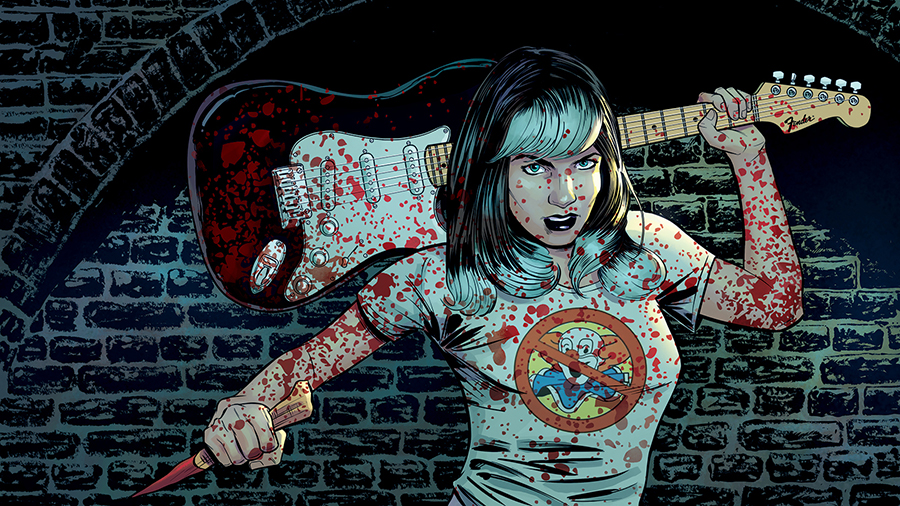
And there you have it! Want to keep updated on all of Steve’s upcoming projects? Check out his website, sign up for his newsletter, and follow him on Instagram, X, and Facebook! He’s got a lot in the works right now, including Undead or Alive (a metafiction graphic novel), Nightmare Theater 3 (a comic anthology he drew the cover for and contributed a short story to), a Kickstarter with Don Cardenas for the fourth issue of Evie and the Helsings, and The Devil’s Sea (the next installment of the Athena Voltaire series)!
While you wait, check out some of Steve’s favourite reads of the year: Josh Winning’s Heads Will Roll (a slasher horror with some spot-on social commentary about online culture), Alex Segura’s Alter Ego (a mystery that’s both a love letter and a savage critique of the comics industry), and Tom Seeley and Tony Fleecs’ Local Man (a rural noir superhero graphic novel series).
And with that, I’ll leave you with one of Steve’s favourite quotes: “Try again, fail again. Fail better.” ~ Samuel Beckett’s Worstward Ho.
Discover more from Alpha's Court
Subscribe to get the latest posts sent to your email.


wow!! 109My Favourite Comics Creator: Steve Bryant
LikeLike